 By
By 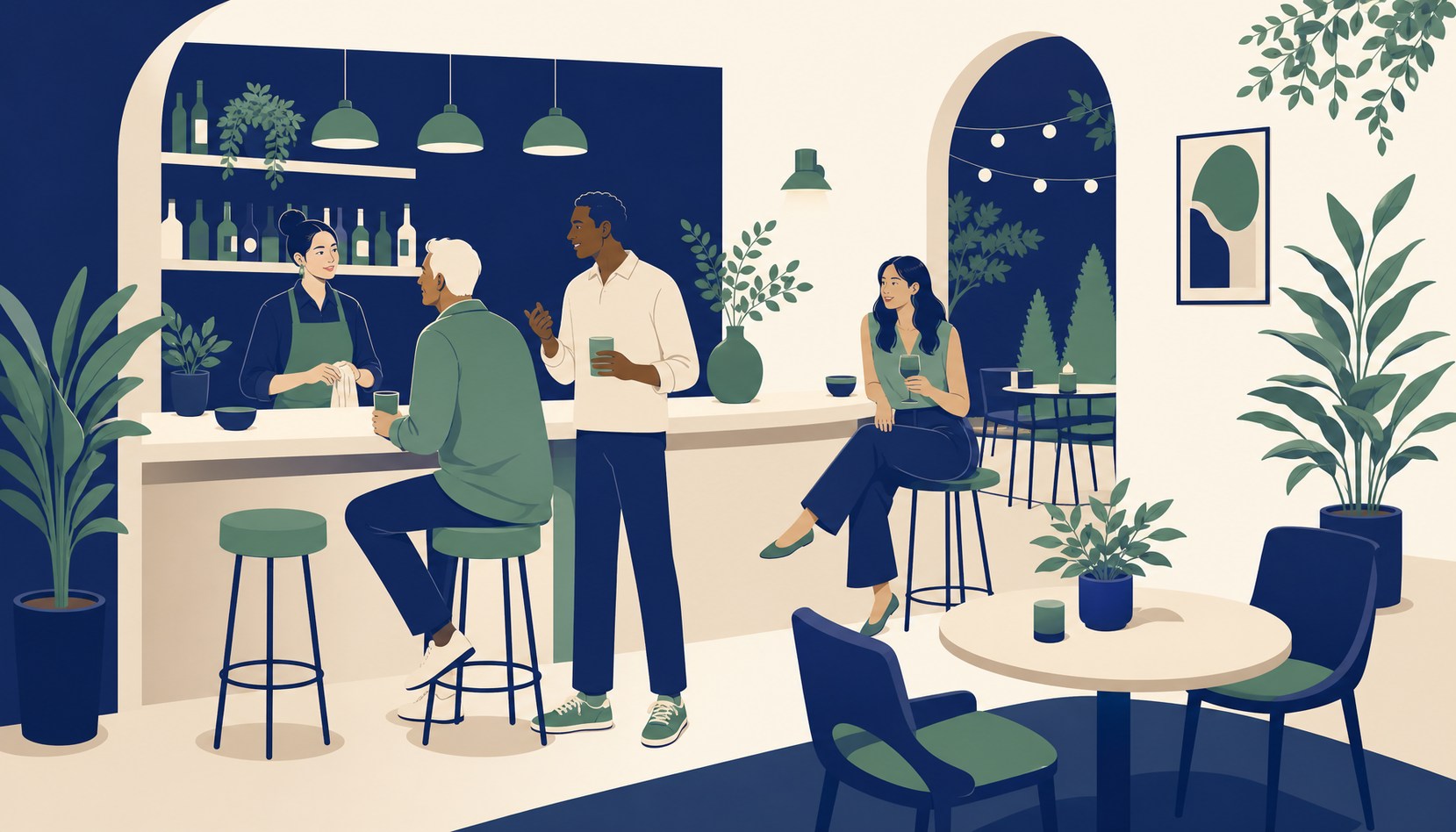
Going to a bar alone is ordinary, safe in a well-chosen place, and much easier than it sounds: sit at the counter, say one real thing to the bartender, give yourself a 45 to 60 minute window, and leave when it ends. The awkwardness most people feel is real, but it has a more specific cause than being alone. It comes from being unanchored, with no seat that makes sense, nothing to do with your hands and no reason to be there.
You're not too alone, you're too unanchored
Almost every guide on this treats the problem as confidence. Be bold, act like you belong. That advice fails because confidence is a feeling, and a feeling is a poor thing to build a plan on. A better frame is that a bar with friends gives you three anchors for free: a table that's yours, a conversation that fills the silence and a built-in reason you're sitting there. Alone, you have to supply those three things yourself, and a counter stool supplies two of them without trying.
Researchers Rebecca Ratner and Rebecca Hamilton ran a set of studies on this exact hesitation and published them in the Journal of Consumer Research in 2015. People skipped enjoyable activities like a gallery visit or a movie when they'd have to go alone, mostly because they assumed others would judge them. Those who went alone enjoyed it about as much as those who went with company. The judgment you're bracing for is mostly imagined, which leaves the practical problem of anchors.
Where to sit: the corner of the counter
Seat choice does more than anything else you control. A small table for two says you were stood up, and a big communal table asks for a conversation you may not want yet. The counter is built for one person. Aim for a corner stool or one near the service well, where the bartender passes often, and you get a neighbor on one side only. That geometry matters. One neighbor means a short exchange is easy to start and easy to let fade, while a stool in the middle of a row puts you between two conversations that don't include you.
Timing helps the same way. Arrive early, around opening or the first hour of the evening on a weeknight, when the bartender has time to talk and the room hasn't formed its groups yet. Showing up at 10 p.m. on a Friday is the hardest version of this you could pick for a first try.
A bar is one way to practice being around people. A NexSpark Circle gives you the same four to six faces every week, so you're not starting from zero each time.
Find your Circle →What to say first
You don't need a line. You need one real question that isn't about you. The bartender is the easiest person in the room to talk to because talking is their job and the topic is already on the table. Ask what they'd pour for someone who likes a certain flavor, or which of two items on the menu people actually order. It's specific, it's easy to answer and it gives you something to react to when the drink arrives.
Sandstrom and Dunn found in a 2014 study in Personality and Social Psychology Bulletin that people who had more brief, friendly interactions with weak ties on a given day reported feeling happier and more connected that day. A two-minute exchange over a menu counts. It doesn't have to turn into a friendship to do something for your evening.
What to do with your hands and your eyes
The phone is the trap. It feels like an anchor, but it signals that you're not available and it cuts you off from the room. Give yourself a short rule: after you order, spend the first few minutes just looking around, then check your phone only if you actually need to. A book is fine. So is a small notebook. Drinking something slowly is also fine, and a non-alcoholic drink is a perfectly good order if you'd rather keep a clear head.
If someone starts a conversation, you'll know within a minute or two whether you want to continue. You're allowed to turn back to your drink with a friendly nod. You're also allowed to stay for an hour with someone interesting. Both are fine, because you came alone and you don't owe anyone your evening.
Set the exit before you walk in
The thing that makes a first solo outing feel risky is that you can't see the end of it. So write the end first. Pick a window of 45 to 60 minutes, decide on one drink or two, and arrange your own ride home before you order. Leaving at the time you chose isn't an escape, it's the plan working. People who leave on their own terms tend to go back, and people who leave in a panic tend not to.
A short safety checklist
- Pick a busy, well-lit place with staff who clearly know the regulars.
- Tell a friend where you are and roughly when you'll head home.
- Keep your drink in sight and don't accept one you didn't watch being poured.
- Sort your ride home before the first order, not after the last.
- Tell the bartender if anyone makes you uncomfortable. They deal with it constantly and they'd much rather know.
When a bar isn't what you're after
A bar suits an evening out on your own. It's a thin way to build friendships, because the crowd changes every night. If what you really want is people you'll see again, a recurring group does that job better, and our guide to adult hobby classes and the piece on going to the movies alone are good next steps. If the thought of walking in makes your chest tighten for days beforehand, start with the smaller version in making friends with social anxiety.
✶ NexSpark Friends
Skip the rotating-stranger problem. We match you into a Circle of four to six compatible people in your corner of Atlanta, so the second and third meeting have the same faces as the first.
Find your CircleSources
- Ratner, R. K., & Hamilton, R. W. (2015). Inhibited from bowing out: Why people avoid enjoyable activities when they have to do them alone. Journal of Consumer Research, 42(2).
- Sandstrom, G. M., & Dunn, E. W. (2014). Social interactions and well-being: The surprising power of weak ties. Personality and Social Psychology Bulletin, 40(7).
The seat, timing and exit guidance reflects common bar-industry practice and our own editorial judgment, not a controlled study. Search volume figures are Google Ads data via DataForSEO, United States, October 2026. No NexSpark member data was used in this article.
Common questions
Is it weird to go to a bar alone?
No. Bartenders and regulars see solo customers every night, and most people at a bar are far too absorbed in their own evening to notice. Research on doing enjoyable things alone finds the fear of being judged is much bigger than the actual judgment, and people who go alone enjoy themselves about as much as people who bring company.
Where should I sit when I go to a bar alone?
Take a stool at the counter, ideally at a corner or next to the service well where the bartender passes often. A corner gives you a neighbor on one side only, which makes a short chat easy to start and easy to end. Avoid a small table for two, which makes you look stood up.
What do I do when I go to a bar alone?
Order, then take in the room for a few minutes before you reach for your phone. Ask the bartender one real question about the menu, such as what they would pour for someone who likes a certain flavor. Set a rough time window before you arrive, usually 45 to 60 minutes, so leaving is a plan rather than an escape.
Is it safe to go to a bar alone?
It is as safe as the bar you pick and the habits you bring. Choose a busy, well-lit place with staff who clearly know the regulars, tell a friend where you are, keep your drink in sight, and arrange your own ride home before the first order. If a person makes you uncomfortable, tell the bartender, who deals with this constantly.
Do I have to drink alcohol at a bar?
No. Most bars serve non-alcoholic beers, mocktails, sodas and coffee, and bartenders handle the order without comment. The seat and the setting do the work, not the alcohol.