 By
By 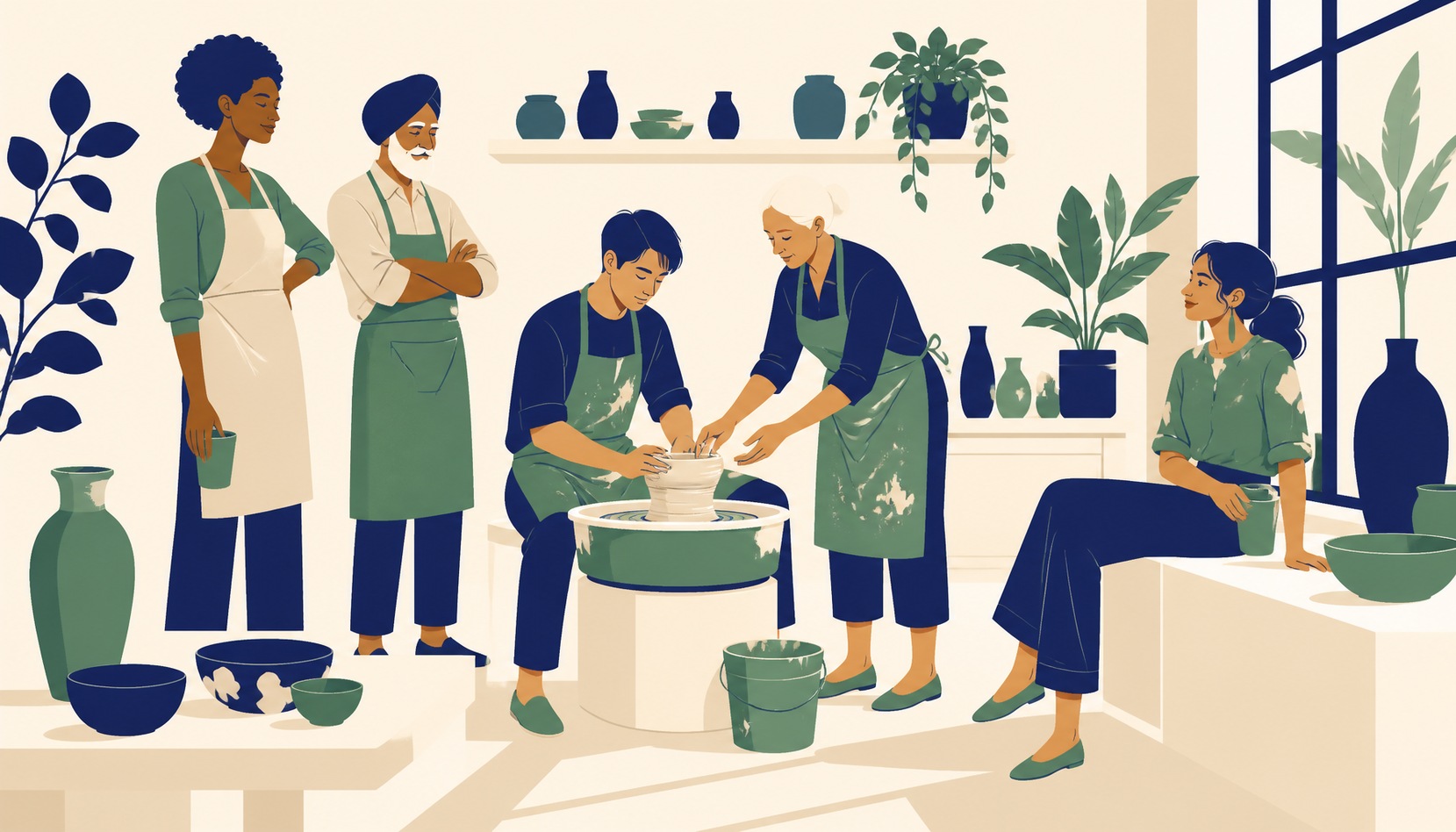
An adult hobby class is a structured, recurring session, usually once a week for four to eight weeks, where a small group learns a specific skill together under an instructor, and almost every studio offers a single trial class before asking for the full series commitment. The format itself is not the hard part, and it is not really a mystery. What actually decides whether the whole thing turns into a habit, or a receipt for a class you took once, is what happens after the first session, not before it.
What actually happens when you sign up
Most adult hobby classes run one of two ways: a single drop-in session you can book with no commitment, usually $20 to $45, or a full series of four to eight weekly classes, usually $150 to $300, occasionally more for anything equipment-heavy like pottery or woodworking where materials and studio access cost extra. Community centers and parks and recreation departments run the same format for noticeably less, often a third of studio pricing for a comparable length class. Almost nothing requires you to commit to the series before trying a single session first, which means the actual first step is smaller than most people treat it as.
The session itself is rarely as intimidating as the idea of it. You show up a few minutes early, materials are provided or listed in advance, the instructor gives a short demonstration, and the rest of the hour is hands-on with the instructor circulating the room. Nobody expects competence in week one. Beginner classes are built assuming nobody in the room has done it before, because that is almost always true.
Which hobby matters less than which format
If the goal is picking up a skill, any reasonably well-taught class will get you there. If part of the goal is meeting people, the specific activity matters far less than the class’s structure, and we cover that distinction fully in our piece on hobbies that actually make friends: whether the same people come back each week, whether the activity leaves room to actually talk, and whether there is a natural place people go once it wraps up. A recurring class with a stable roster does that work on its own. A rotating drop-in class, a different group every time, mostly does not, whatever the hobby happens to be.
The real bottleneck is week two, not week one
Most advice aimed at adults looking for a hobby treats signing up as the hard part: the fear of being bad at something in front of strangers, the awkwardness of walking into a room where you know no one. That part is real, but it is also usually over within the first twenty minutes, once the class actually starts and everyone is equally new at it. The harder moment comes later, in the second or third week, once the novelty of trying something new has worn off and the only thing left holding the habit together is whether you actually want to be there. That is where most people quietly stop, not at the door of the first class but at the decision to show up again once it stopped feeling novel.
The fix is not motivation, it is lowering the bar for what counts as success early on. The goal for week one was never mastery, it was finding out whether you wanted to go back. The goal for week two is smaller still: just show up a second time, before deciding anything about whether this is “your thing.” Two sessions is usually enough to tell the difference between a hobby that is not for you and a hobby that just needed a second look past the beginner awkwardness of the first one.
The class was never the hard part. The second time you show up, once it has stopped being new, that’s the actual test.
This is the exact design behind a NexSpark Circle: the same four to six people, meeting on repeat, so showing up the second and third time is easier than it is in a rotating drop-in class.
Find your Circle →How to actually start one
- Search your city’s parks and recreation catalog first. It is almost always the cheapest version of the same class a private studio runs.
- Look specifically for “drop-in” or “trial class” listings rather than committing to a full series on the first try.
- Message ahead if a listing does not say “beginner” or “all levels.” One line clears it up, and most studios answer quickly.
- Pick the version with a fixed weekly slot and a stable roster over a rotating open-studio format, if meeting people is part of the point.
- Commit to two sessions minimum before deciding anything. The first one is not a fair test on its own.
When it isn’t really about the hobby
Everything above assumes the barrier is mostly logistics: not knowing where to look, or not being sure you will be any good at it. If what is actually stopping you is closer to dread, replaying the idea of walking into a room of strangers for days before it happens, that is a different and more specific problem than the one this piece answers. We cover that version directly in our piece on making friends with social anxiety, and it is worth reading that one instead if it sounds closer to what you are dealing with.
✶ NexSpark Friends
Skip the rotating-stranger problem entirely. We match you into a Circle, four to six genuinely compatible people in your corner of Atlanta, so week two and week three have the same faces as week one, not a new room to walk into every time.
Find your CircleSources
No formal study is cited in this piece; the patterns described reflect common observations reported by class-based studios and community programs, not a controlled study. Pricing ranges reflect typical U.S. studio and parks and recreation listings as of September 2026. Search volume figures are Google Ads data via DataForSEO, United States, September 2026. No NexSpark member data was used in this article.
Common questions
How much do adult hobby classes cost?
A single drop-in or trial class typically runs $20 to $45. A full four-to-eight week series is usually $150 to $300, though pottery, woodworking, and other equipment-heavy classes run higher because of materials and studio access. Community centers and parks and recreation departments are consistently the cheapest option, often a third of studio pricing for the same length class.
Do you need experience to take an adult hobby class?
No. The large majority of adult hobby classes are explicitly built for beginners, and studios that run recurring sessions design the first class assuming nobody in the room has done it before. If a listing does not say “beginner” or “all levels,” a quick message to the studio before signing up clears it up in one reply.
How do I find a hobby as an adult?
Start from a trial class rather than a decision. Most studios, and nearly all community and parks and recreation programs, offer a single drop-in session before asking for a full series commitment, which turns “which hobby should I pick” into “did I want to go back,” a much easier question to answer honestly.
What are some fun class ideas for adults?
Pottery, climbing, cooking, social dance, choir, rec sports leagues, and community theater are common starting points because nearly every city runs a beginner version. The specific activity matters less than whether the class meets on a recurring schedule with the same group each week, which is what actually determines whether it turns into anything beyond the hour itself.