 By
By 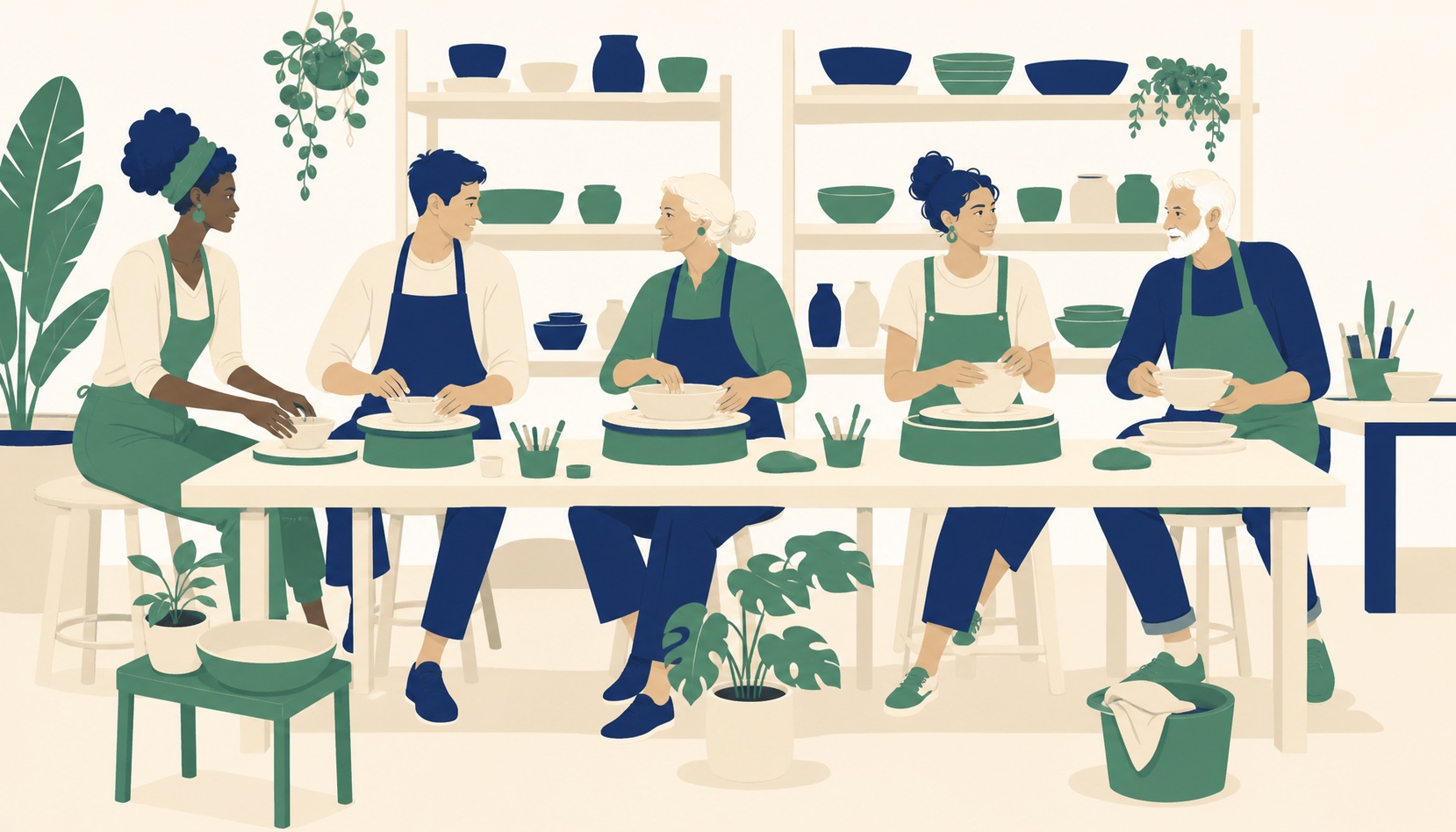
Every “hobbies to make friends” list works the same way. It hands you fifteen activities ranked by how fun or popular they are: pickleball, pottery, run clubs, a book club, maybe a sourdough class if the list is new enough. Try three of them and a pattern shows up fast. Some turn into a standing group text within a month. Others you can attend for a year and still be re-introducing yourself to people you've seen fifty times.
The difference isn't the activity. It's the format, and you can score almost any hobby against it before you sign up for a single class.
The three features that actually decide it
Strip away the marketing around any hobby and three specific features of its format predict whether it turns into friendship. This isn't a research finding, it's just the pattern that keeps showing up once you compare hobbies that build a friend group against ones that don't.
- Same roster. Do the same people come back every week, a league team, a choir section, a class cohort, or is it a rotating crowd of new faces each time, a drop-in class, open gym, a different fifty strangers?
- Talk time inside the activity. Is there a built-in gap to actually talk, waiting your turn at bowling, belaying at a climbing gym, hands on a pottery wheel, a kitchen shift, or does the activity occupy your attention and your mouth the whole time, spin class, yoga, a movie, a concert?
- A natural “after.” Is there a default place people go once it wraps up, the bar after league night, coffee after the group walk, or does everyone just get in their cars and leave?
Score high on all three and a hobby makes friends almost by accident, you barely have to try. Score low on all three and it usually stays exactly what it looks like on the label: a hobby you love, done alongside people you never quite meet, no matter how many times you show up.
This is the exact design behind a NexSpark Circle: the same four to six people, meeting on repeat, with nothing else competing for the room's attention.
Find your Circle →Score your own hobby: NexSpark's framework, not a study
Below is our own scoring of 14 common hobbies against the three features. It's a framework, not research, and your specific gym, class, or league can score differently than the format usually does. A run club that's the same six people every Tuesday behaves nothing like a run club that's a different fifty people every Tuesday, even though both get called “a run club.”
| Hobby | Same roster? | Talk time? | Natural “after”? | Why |
|---|---|---|---|---|
| Rec sports league | Yes | Sometimes | Yes | Same roster for a whole season, and the post-game bar is basically part of the sport |
| Climbing gym (drop-in) | No | Yes | No | Waiting for a route or belaying leaves real talk time, but the crowd rotates |
| Run club | Sometimes | Yes | Yes | A standing weekly crew beats an open drop-in, but pace groups and a coffee stop after are common either way |
| Choir or community theater | Yes | Yes | Sometimes | Same cast or section for a whole run, plus rehearsal breaks; cast parties happen, just not weekly |
| Pottery or ceramics class | Yes, if it's a multi-week series | Yes | No | A wheel or table you return to for weeks, with real time to talk while your hands work |
| Cooking class series | Yes, if booked as a series | Sometimes | Sometimes | Hands are busy at the stove, but you sit down together to eat what you made |
| Trivia team | Yes | Yes | Yes | Same team, an evening built around arguing over answers, already sitting in a bar |
| Board game night | Yes, if the host repeats it | Yes | Sometimes | The game itself is the conversation, and nobody's rushing off afterward |
| Volunteering shift | Yes, if it's a standing shift | Yes | Sometimes | Same shift crew on a schedule, hands busy, mouths free |
| Community garden | Yes | Yes | No | Same neighbors at their own plots, chatting over the fence, but no default after-spot |
| Book club | Yes | Yes | Sometimes | Same members monthly and the meeting itself is the talking; the “after” is often already happening in someone's kitchen |
| Yoga, spin, or fitness class | No | No | No | Different neighbors most classes, no talking during, everyone's out the door right after |
| Film club or screenings | Sometimes | No | Sometimes | Regulars build up at a repertory series, but you're silent for two hours; some series add a discussion after |
| Solo gym | No | No | No | No fixed roster, headphones in, nobody's sticking around |
Our own scoring, based on how each format typically runs, not a peer-reviewed study. If a running format like this appeals to you but there's no rec league nearby, our look at run clubs as the new third place covers what to look for. If book club is the one you're circling, our free book club starter kit builds a first-meeting agenda and an invite message for you in a few minutes. And if none of these exist near you yet, our roundup of what replaced Meetup in 2026 covers where people actually find a recurring group now. In Atlanta specifically, we keep a checked directory of local run clubs and a wider list of standing social clubs by neighborhood.
Turning a hobby you already love into one that makes friends
You don't have to give up a hobby that scored low. Most can move up a notch or two with a small change to how you do it, not what you do.
- Join the team or league version, not the drop-in version. A rec soccer league and pickup soccer at the park are the same sport with a completely different roster. If the recurring version exists, take it over the open one.
- Arrive early and stay late. The class itself might occupy your whole attention, but the ten minutes before it starts and the ten after it ends are usually wide open. That's where most of the actual talking happens, even at a spin studio.
- Be the one who suggests the “after.” Climbing gym, running route, yoga class, whatever it is, somebody has to say “a few of us are grabbing coffee, want to come” first. Most people are relieved when someone else does it.
If you're shy or introverted, pick a hobby with a shared object
A hobby where you and a stranger are both looking at the same third thing, clay on a wheel, tiles on a board, a seedling bed, a page you've both read, lowers the pressure of a face-to-face conversation with nothing to anchor it. You have something to talk about besides each other, which is exactly what makes small talk hard for a lot of introverted people in the first place. Pottery, board games, a community garden plot, and a small book club all work this way, and conveniently, they also tend to score well on same roster and talk time.
How long to actually give it
Communication researcher Jeffrey Hall's research puts it at roughly 50 hours of shared time to become a casual friend, about 90 hours to become friends, and more than 200 hours before someone counts as a best friend, and it's leisure hours that move a friendship, while hours spent at work or in school largely don't. You can run your own numbers against that on our friendship hours calculator. We've written before about why recurring beats one-off in general; this is the hobby-specific version of the same idea, so it's worth reading our fuller playbook on how to make friends as an adult if the format question above isn't the only thing holding you back. Search interest backs up how common the question is: about 210 people a month in the US search “hobbies to meet people” on Google, per Google Ads data from August 2026.
Where NexSpark Friends fits in
A NexSpark Circle is designed around the same three features, on purpose. It's four to six people, not a rotating room. It's built to talk, not built around an activity that occupies your mouth for an hour. And it's recurring by default, so the “after” question never comes up because there isn't a single event to end. We're not going to pretend a hobby doesn't still need you to show up. It does, every format on the table above still depends on you actually going, more than once, and there's no version of any of this that guarantees a friendship out the other side. What a well-designed format does is stop wasting the hours you do put in.
Common questions
What hobbies are best for making friends?
The specific hobby matters less than its format. Look for one where the same people come back each week, there are built-in gaps to talk during the activity itself, and there's a default place to go afterward. On the scoring table above, a rec sports league, a trivia team, and a choir or community theater cast tend to hit all three; a drop-in fitness class or solo gym time usually hits none of them.
What is the 3 hobby rule?
It's a popular rule of thumb from the internet, not a study: one hobby to make you money, one to keep you in shape, and one to make something. There's no research behind it, and we can't trace it to any one source. Our take, since this whole page is about friendship: make at least one of your three hobbies social by format too, meaning it scores well on the three features above, or all three can leave you exactly as friendless as one.
How long does it take to make friends through a hobby?
Communication researcher Jeffrey Hall's research puts it at roughly 50 hours of shared time to become a casual friend, about 90 hours to become friends, and more than 200 hours before someone counts as a best friend, and Hall found it's leisure hours that move a friendship, while hours at work or in school largely don't. A hobby only helps if its format actually lets those hours pile up with the same people; run the numbers yourself with our friendship hours calculator.
What hobbies are good for making friends if you're introverted?
Look for a hobby with a shared object to focus on instead of each other, clay on a wheel, tiles on a board, a seedling bed, a book you've both read, since it takes the pressure off making conversation out of nothing. A pottery class, a board game night, a community garden plot, or a small book club all work this way, and they tend to score well on same roster and talk time too.
Can a solo hobby like running or the gym ever make friends?
Not the solo version of it, no, but the same activity in a different format usually can. Swap a solo run for a run club, or a solo gym session for a rec league or a class you take on a schedule with the same instructor and the same faces. The activity barely changes. The format is what starts doing the work.