 By
By 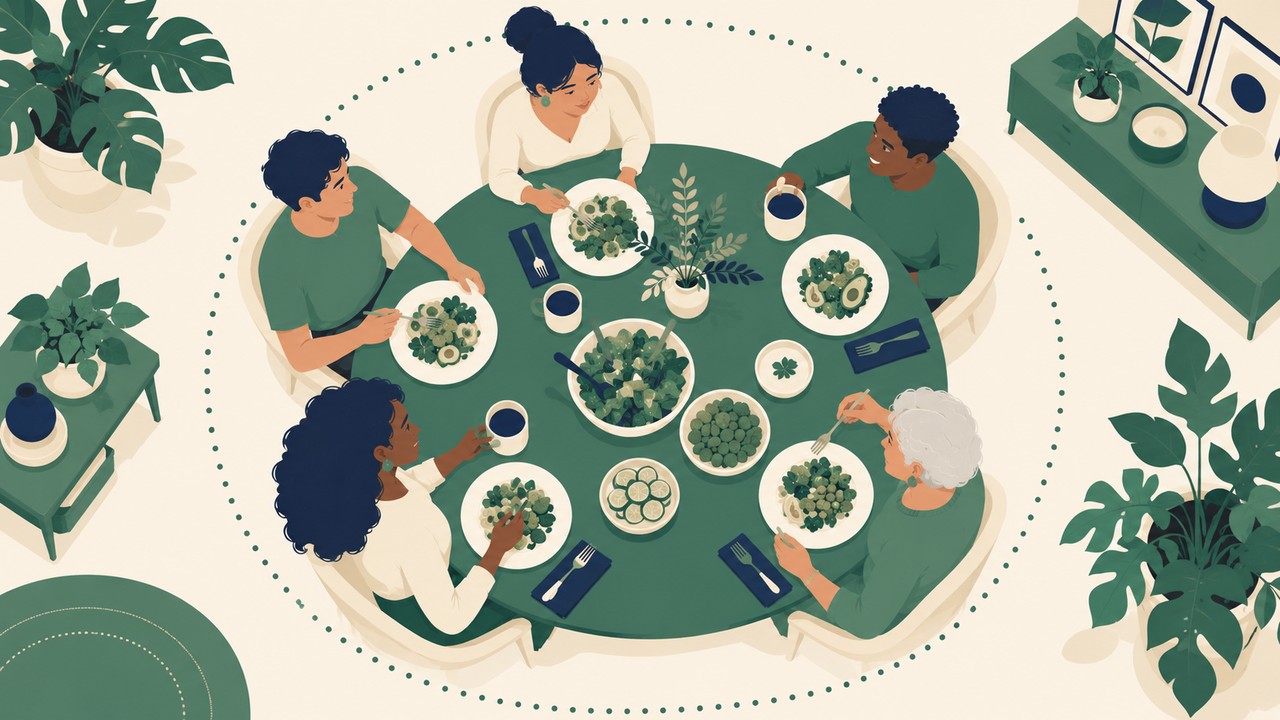
The most consequential design decision in NexSpark Friends isn't the matching engine. It's a number. A Circle is four people to start and can grow to six, never two, never fifteen. In some cases, such as remote or smaller areas, a Circle may start with three. Here's why we're stubborn about the size.
Two is an audition
A one-on-one meetup with a stranger, however compatible, borrows all the worst mechanics of a blind date: the pressure to perform, the silence with nowhere to hide, the unspoken verdict at the end. Friendship almost never begins that way in the wild, it begins alongside other people, where you can drift in and out of the conversation and like someone before you've ever been alone with them.
A pair has another quiet failure mode worth naming: with only two people, it's easy for the effort to become one-sided, one person always the one reaching out, planning, remembering. Spread across four to six people, no single person has to carry the whole friendship alone.
Fifteen is a crowd
Big mixers fail in the opposite direction. Past a certain size a gathering stops being a group and becomes an audience, you leave having had four shallow conversations and belonging to nothing. Large meetups are how you meet strangers. They are not how strangers stop being strangers.
Four to six is a table
Conversation researchers, Robin Dunbar's group most famously, have found that natural conversations max out at about four active speakers before they split. A Circle of four to six sits exactly on that seam: one conversation that can hold everyone, or two that form and re-merge on their own. It's the dinner-party number, and dinner parties are the oldest friendship technology there is.
One honest note on the low end. Four is the standard we aim for. In some cases, such as remote or smaller areas, a Circle may start with three. Three can still hold one conversation everyone is part of, and a Circle that starts small can still grow to six as more people nearby join.
The size also survives real life. With five people, one dropout doesn't cancel the night, and one quiet member doesn't sink the table. Scheduling stays possible; group chats stay readable; a shared anchor interest, every Circle has one, gives the first hour its subject.
It’s not a coincidence that clinical group therapy runs on a different number for a different reason: those groups typically run seven to ten people, sized for enough perspectives in the room rather than for one conversation everyone can hold. The specific mechanism that makes a structured group work doesn’t require a clinical room to happen, but it does depend on the same few faces showing up again and again, which is the whole case for keeping a Circle small.
And everyone is real
One more stubborn rule: before anyone joins a Circle, they verify they're a real person, free, once, about two minutes. Showing up to a patio table with five strangers takes a little courage. Knowing every one of them is exactly who they say they are is what makes the courage reasonable. (For the actual conversation once you sit down, see what to talk about at your first Circle meeting.)
Four to six compatible people, one table, one plan already made. That's the whole product. The rest is your story.
See the full science behind how Circles work for the citations, including where the research honestly disagrees.