Friendship burnout: when constant contact still feels lonely
 By Kenneth Kintsugi, holistic relationship specialist · Jul 21, 2026 · 5 min read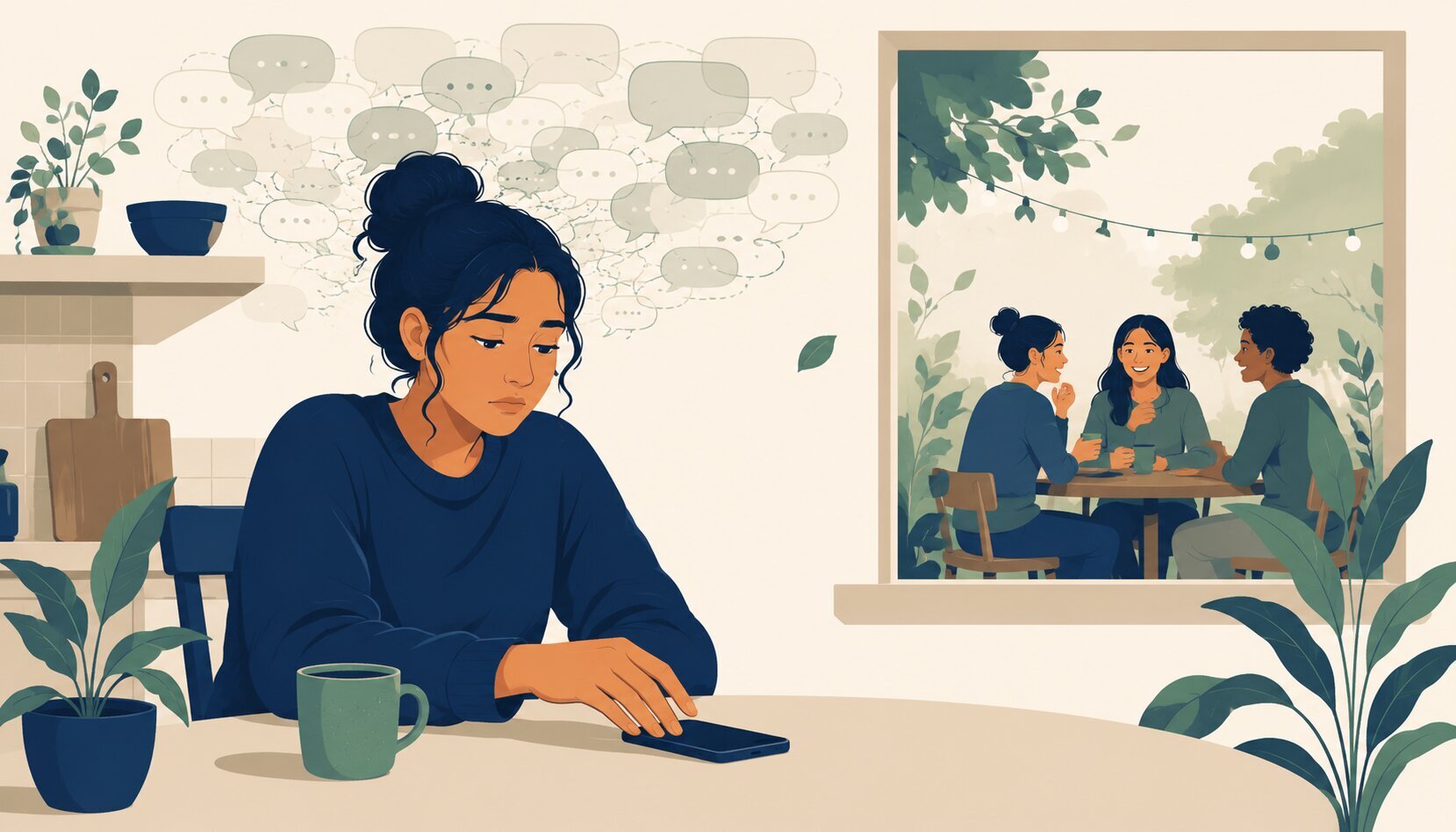
You're in more group chats than ever, and somehow lonelier for it. Digital friendship burnout isn't a lack of connection. It's too much of the wrong kind, and it has a real recovery plan.
Most of the writing on adult loneliness assumes the problem is too few friends. Increasingly, that's only half the picture. A lot of people have plenty of contact, texts, group chats, story replies, the occasional voice memo, and still end most days feeling like none of it actually landed. That specific exhaustion has a name now: digital friendship burnout. It isn't about being alone. It's about being reachable constantly and connected rarely.
What digital friendship burnout actually is
Digital friendship burnout is the fatigue of managing social contact across too many platforms at once, group texts, social media threads, DMs, voice notes, all while carrying the quiet expectation that you're available for any of it, any time. Recent research puts a number on it: an estimated 38% of adults report feeling emotionally drained by the constant demands of digital socializing. It's not that people have stopped caring about their friends. It's that the format of modern contact rarely gives care anywhere to land.
How this is different from just having too few friends
The friendship recession, the well-documented decline in close adult friendships, is a real and separate problem: too little contact, full stop. Digital friendship burnout is closer to the opposite. You can be in touch with dozens of people daily and still feel this specific kind of tired, because the contact is wide and shallow instead of narrow and deep. Scrolling a group chat isn't the same as being known by someone. Both problems can coexist, and for a lot of people, they do.
The signs
- You dread opening group chats you used to enjoy. What was once a source of connection now reads like an inbox you're behind on.
- You feel guilty about unanswered messages from people you actually like. Not strangers, real friends, and the backlog itself becomes a source of stress.
- Almost all your "socializing" happens through a screen. Constant digital contact, rare in-person plans.
- You leave most digital hangouts feeling flatter, not fuller. A real conversation should recharge you. Scrolling a thread rarely does.
- You've quietly muted or left group chats just to get a break. Not because you dislike the people in them, because the volume itself became the problem.
The friendship recession is too little contact. Digital friendship burnout is too much of the wrong kind. Both leave you lonely, just from opposite directions.
Why it's getting worse, not better
National data on digital fatigue backs this up broadly: about 62% of Americans report recurring digital burnout, with social media overload among the top causes. Layer personal group chats on top of work Slack and email, all under the same expectation of constant availability, and the exhaustion stops being surprising. The tools built to make staying close easier have, for a lot of people, made it harder to ever feel done for the day.
What actually helps
The fix isn't fewer friends, it's fewer shallow threads and more real ones. That usually means narrowing down to one to three friendships you genuinely invest in, rather than maintaining a wide bench at a surface level. It means moving more of that contact offline, into an actual plan instead of another exchange of messages. And it means giving yourself real permission to leave a group chat that only produces noise, without treating that as a failure of friendship. Fewer, deeper connections recover faster than more, thinner ones, and they're also just more fun.
Choosing depth over reach
Here's the part worth sitting with: the exhaustion isn't a sign you're bad at friendship. It's a sign the format has been mismatched to the need. Most people don't actually want fifteen group chats. They want two or three people who show up, in person, on purpose. That's a much smaller ask than it sounds like, and it's also the one modern digital life keeps failing to deliver. There's a name for choosing that harder, in-person option on purpose: friction-maxxing, and it's a useful reframe for anyone whose contact list has quietly become a to-do list.
That's the whole premise behind NexSpark Friends. Instead of another feed to keep up with, you get matched into one small Circle of four to six compatible people, built around real, structured meetups instead of an open-ended group chat you're expected to monitor forever. Less reach. More actual contact.
Common questions
What is digital friendship burnout?
Digital friendship burnout is the exhaustion that comes from too much low-quality digital socializing, not from a lack of connection. It's the specific fatigue of managing texts, group chats, and social threads across multiple platforms while feeling like none of it adds up to real closeness.
How is it different from the “friendship recession”?
The friendship recession describes having too few close friends. Digital friendship burnout is close to the opposite problem: too much scattered, shallow contact across too many threads, none of it deep enough to actually recharge you. You can be constantly in touch with people and still feel this kind of tired.
What are the signs of digital friendship burnout?
Dreading opening group chats you used to enjoy, feeling behind on replies to people you actually like, socializing constantly online but rarely in person, and ending most digital hangouts feeling more drained than connected are the clearest signs.
How do you recover from digital friendship burnout?
Narrow down to one to three friendships you actually invest in instead of maintaining dozens at a shallow level, move more of that contact offline into real plans, and give yourself permission to leave group chats that only produce noise. Fewer, deeper connections recover faster than more, thinner ones.
Keep reading
The signs
Signs of a one-sided friendship
A different kind of imbalance, and how to tell the two apart.
A different pace
The case for slow friendship
Why the best friendships resist being rushed, or constantly maintained.
The data
State of Friendship 2026
Adult friendship, by the numbers, including the loneliness epidemic.
Review
Nextdoor review
The hyperlocal, lower-pressure alternative to another feed to keep up with.
The same team also runs a matchmaking service
NexSpark Matchmaking is a separate service on a separate site, run by the same people and built on the same compatibility work. Entirely optional and nothing to do with your Circle. If you are curious how it works, read whether matchmaking is actually worth it.