 By
By 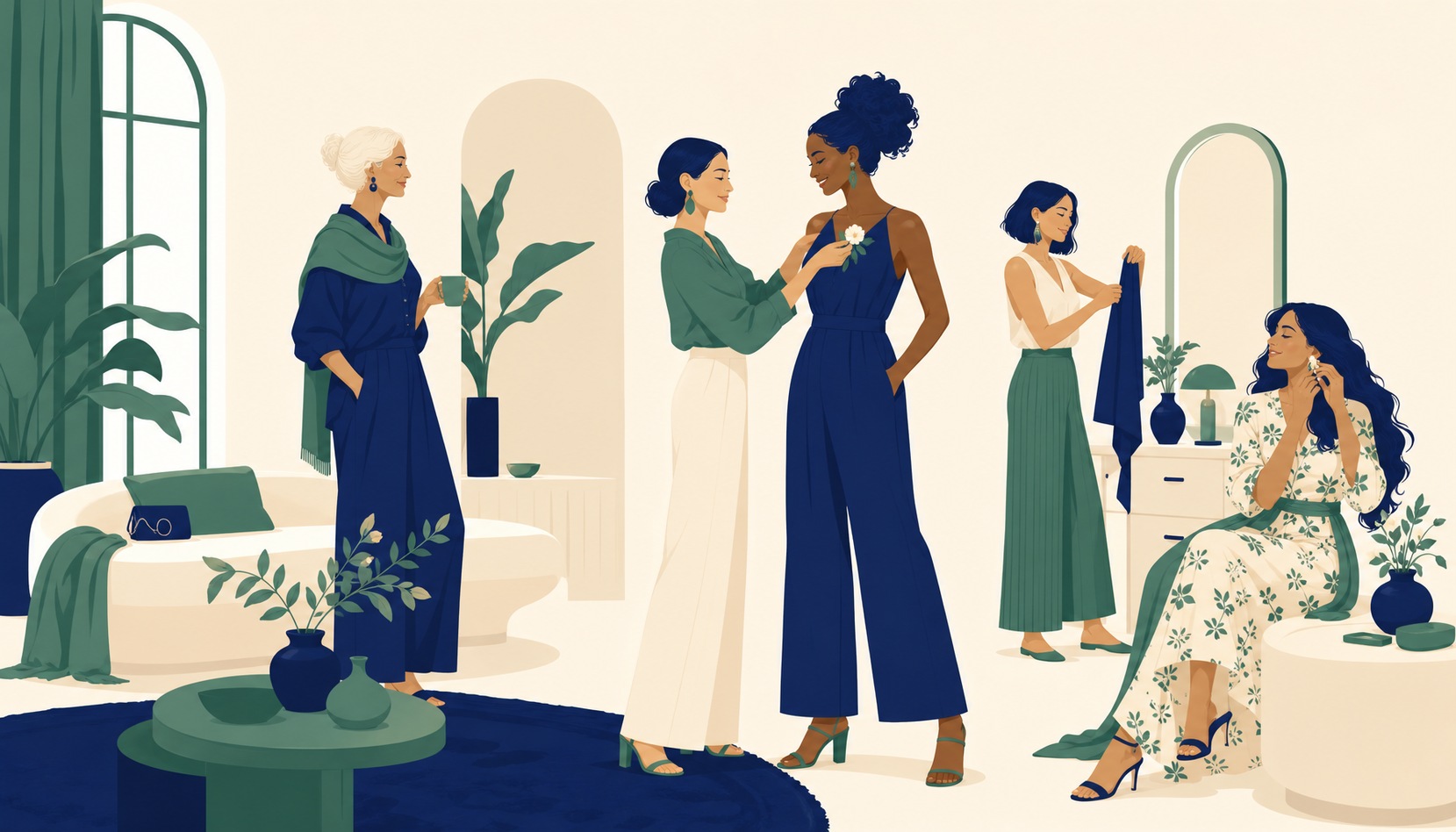
Somewhere between the venue and the florist, most engaged couples run into a smaller decision that turns out to be a much harder one: who is in the wedding party, and who isn’t. It looks like logistics, a box to check alongside the seating chart and the cake flavor. It isn’t. The bridal party is the only ritual left in adult life that asks you to rank your friends in public, to name five or six people ahead of everyone else and stand them in a line so the whole room can see the order. A wedding without one isn’t a downgrade. It’s a chance to honor the friends who mattered without pretending some of them mattered more.
A ranking, whether anyone says it out loud or not
Nobody plans a wedding party thinking of it as a hierarchy. But look at what it does. It sorts a friend group into “in” and everyone else, and then it sorts “in” again, because someone becomes maid of honor and someone doesn’t. That’s two ranking decisions layered on top of a friendship that, up until the engagement, never needed to be ranked at all. Most other adult rituals don’t work this way. You don’t line up your friends for a promotion or a new house. A wedding is the one occasion where the social math gets made visible, in matching outfits, on a stage, in photos that will outlive the friendships themselves.
The fallout is rarely about the wedding day. It’s about what happens after, to the friend who wasn’t picked and now reads every group text a little differently, and to the friendship that was fine right up until it had a public grade attached to it. It’s common to agonize over the list for weeks, not because they don’t know who their close friends are, but because the format forces a cutoff that their actual friendships don’t have. Skipping the bridal party removes that forced cutoff. It doesn’t remove the friends.
What the data actually says
It’s worth being honest here instead of pretending this is some quiet majority move. Zola’s 2026 First Look Report, based on a survey of more than 11,500 couples marrying in 2026, found that classic elements like wedding parties “aren’t going anywhere,” and that Gen Z couples are actually embracing traditional wedding parties even more than the generations before them, alongside an average guest count of 145. The Knot’s Real Weddings Study puts the typical number of bridesmaids at four. This is not a fringe tradition on its way out.
At the same time, Brides reported in January 2026 that couples who do skip the wedding party most often cite outfit cost, the duties expected of friends, and the politics that can spring up among the people asked to serve. Those reasons are specific and practical, not a rejection of ceremony itself. Skipping the bridal party is a real option and a minority one, and both things are true at once.
Couples marrying in 2026 surveyed for Zola’s First Look Report; classic wedding parties are holding, not fading
Zola, First Look Report 2026
The typical number of bridesmaids at a wedding, per the Real Weddings Study
The Knot, Real Weddings Study
The wedding-party decision is really a friendship decision. Who you ask says a lot about the shape of your Circle right now.
Try the NexSpark friendship quiz →The getting-ready morning is the real ceremony
If you take the lineup off the table, something useful happens: the getting-ready morning stops being a backstage warm-up for the real event and starts being the real event. This is usually where the closest friends already end up anyway, five or six people in one sunlit room, someone pinning a flower to someone else’s outfit, someone else's mother or oldest friend just sitting with a mug of coffee because her being present is the point, not her outfit matching anyone. Nobody is wearing the same dress. Nobody had to be told they made the cut to be in that room. Couples who plan around this morning on purpose, instead of treating it as filler before the photographer arrives, often find it's the part they remember most clearly a year later.
Ways to honor friends without a lineup
None of this requires giving up ceremony. It just moves the ceremony away from ranking. A few ways couples are doing it:
- Honored guests, not a matching lineup. A shared color, a single flower, or a small pin worn by the friends who matter most, instead of coordinated dresses and an assigned order.
- A flexible processional. Walk down together as a group, walk with parents, or walk alone. There isn’t a rule that says the entrance has to double as a cast list.
- Rings held by someone other than a title. The officiant or a friend in the front row can carry the rings just as easily as a designated best man.
- A toast slot without the title. Ask the friend who would have been maid of honor to speak, without making her earn a title first.
- A photo list that names people. Instead of one group shot standing in for “the important ones,” a list of individual names to photograph with the couple, which usually ends up being a longer and more honest list than any five-person lineup would have allowed.
Telling a friend who expected to be asked
This is the conversation people put off, and it doesn’t need to become an apology spiral. If a friend has reasonably assumed she’d be a bridesmaid and the wedding won’t have one, say so plainly and early, well before the invitations go out. Something like: “We’re not doing a wedding party at all, it isn’t about rank, and I want you there in a way that isn’t just a guest seat. Would you do a reading, or be part of getting ready with me that morning?” That sentence does three things at once: it states the fact, removes her from a comparison she didn’t ask to be in, and hands her something specific instead of a vague reassurance. Most friends don’t actually want the title. They want to know they still matter, and a clear answer does more for that than a long explanation ever will.
The friend who was your bridesmaid
There’s a version of this that gets skipped in most advice: the friend who put you in her own wedding party a few years ago, in the dress, at her shower, at her bachelorette weekend, and who now watches you skip the whole structure for your own wedding. She isn’t wrong to notice the asymmetry. This doesn’t mean you owe her a bridesmaid slot out of reciprocity. It does mean the conversation above matters more with her specifically, and that she deserves to hear the reasoning from you directly, not piece it together from the invitation. Reciprocity in friendship is usually about being seen and included, not about matching every gesture exactly, and a good, honest conversation covers that ground better than symmetry does.
Is this right for you
Not every couple should skip the bridal party, and this piece isn’t arguing that they should. If you have five friends who would love the ritual, the outfits, and the shared planning, that tradition is worth keeping exactly as it is, and the data above says most people still do. The point isn’t that a bridal party is wrong. It’s that it’s one option among several, and the couples who skip it tend to be the ones who noticed the ranking first and decided they didn’t want to build their wedding around it. Either choice can honor your friends well. What matters is making it on purpose, not by default.
Methodology & limitations
- This is a friendship framing, not a wedding-planning guide. Logistics like vendor contracts, budgets, and timelines vary by region and venue and aren’t covered here in detail.
- Skipping the wedding party remains a minority choice. Zola’s 2026 data and the Knot’s bridesmaid figures both describe a tradition that is holding steady, not one in decline, and this piece treats that honestly, without overstating a trend.
- We used no NexSpark member data. Every figure on this page comes from published, external sources.
Common questions
What to do instead of a bridal party?
Instead of a lineup, most couples who skip the bridal party still find ways to mark the friends who matter: honored guests who wear a shared color or a single flower rather than matching outfits, a group walk down the aisle without a set order, rings carried by the officiant or a front-row friend, a toast slot for whoever would have been maid of honor, and a photo list that names people individually rather than posing them as one group. The point isn’t to remove your friends from the day. It’s to include them without ranking them first.
Is it normal to have a wedding without bridesmaids?
It’s not the majority choice, and it’s worth being honest about that. Zola’s 2026 First Look Report, based on a survey of over 11,500 couples marrying in 2026, found that classic elements like wedding parties “aren’t going anywhere” and that Gen Z couples are embracing traditional wedding parties even more than the generations before them. The Knot’s Real Weddings Study puts the typical number of bridesmaids at four. Skipping the wedding party is a real option, but it’s a minority one, not a movement that’s replaced the tradition.
How to include friends in a wedding without a bridal party?
Name people instead of positions. Ask a friend to do a reading or a toast without making it a title. Treat the getting-ready morning, not the ceremony lineup, as the real gathering, since that’s usually where the closest friends already end up anyway. And if a friend expected to be asked and wasn’t, tell them directly and early rather than letting them find out from the invitation or the seating chart.
Sources
- Zola, The First Look Report 2026, survey of over 11,500 couples marrying in 2026.
- The Knot, How Many Bridesmaids Should I Have?, Real Weddings Study, 2023.
- Brides, Why Couples Are No Longer Having Wedding Parties, January 26, 2026.
Figures are reported as published by each source. See each source for full methodology. Journalists and writers are welcome to cite this page, just link back so others can find the sources too.