Fun things to do with friends, free, cheap, and worth doing
 By Matthew Firth, founder of NexSpark Friends · Aug 1, 2026 · 8 min read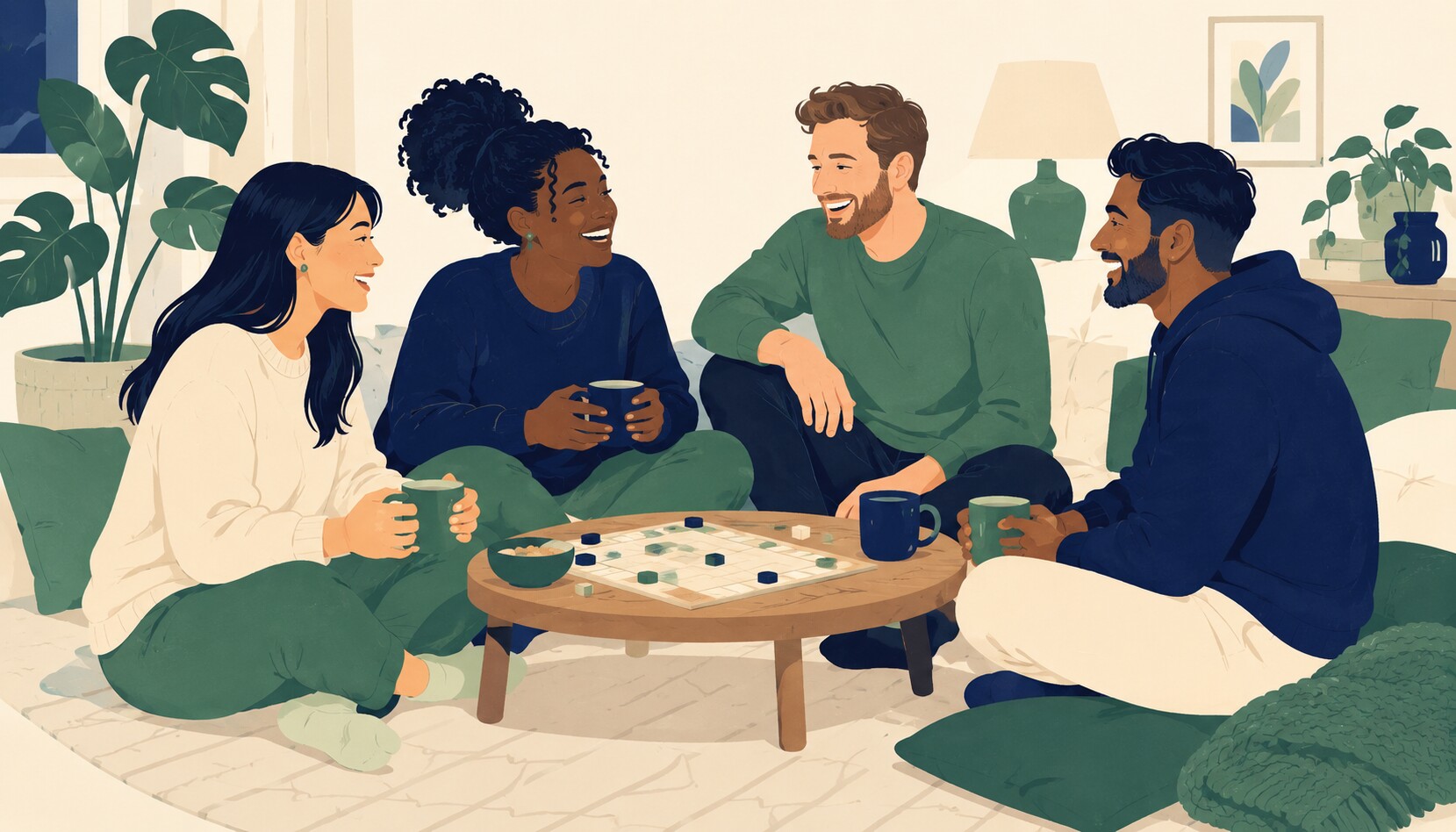
Most lists like this assume the problem is imagination. It is usually money, and nobody says so. Here is the honest version, sorted by what things actually cost.
Start with the finding that reframes the whole subject. LendingTree surveyed 2,000 US adults in July 2025 and found 69% had opted out of a social outing because it felt too expensive. Of those, 39% never told the person who invited them the real reason. The CFP Board found much the same in January 2026: 67% had declined an event over cost in the previous two years, and 56% of them did not say why.
So the common failure is not that people run out of ideas. It is that a money problem gets quietly relabeled as a scheduling problem, the other person reads it as disinterest, and the friendship thins out over something neither of them ever named.
What actually got expensive
“Everything costs more” is true and useless. The useful version is knowing which parts rose fastest, because that tells you what to cut instead of cutting the evening.
| Category | Since Feb 2020 |
|---|---|
| All items (general inflation) | +29.1% |
| Food away from home | +36.5% |
| Alcohol away from home | +27.0% |
| Alcohol at home | +11.6% |
| Movies, theaters, concerts | +28.5% |
US Bureau of Labor Statistics, Consumer Price Index, data through June 2026. We went through this in more detail in the friendflation piece.
Look at the two alcohol rows. The same drink is up 27.0% in a bar and 11.6% in your fridge, well over twice as fast. The drink did not get expensive. The room did. That one comparison isolates the social part of the spending from the substance itself, and it points directly at where the savings are.
Almost every expensive way to see your friends has a cheap version that is not worse. It is just indoors, or earlier, or at someone’s house.
One honest caveat before the list
Cheaper plans are not the whole answer, and I would rather say so than sell you a fix that only half works. American Time Use Survey data shows time spent socializing fell from about 47 minutes a day in 2003 to 38 minutes in 2019. Roughly 70% of the two-decade decline had already happened before the price spike. Through 2021 to 2025, the worst inflation in forty years, the figure was flat.
Cost is a real squeeze layered on top of an older and larger retreat that it did not cause. So use the list, but notice the section near the end about making something recur. That part matters more than any single idea above it.
What should you actually do this week?
Four taps and three real suggestions, pulled from the list below.
Free things to do with friends: at someone’s place
$0
- Rotating potluck. One host, everyone brings one thing. The rotation is the point: nobody carries the cost or the tidying twice in a row.
- Film night with a constraint. Released before you were born, under 90 minutes, one-word title. The constraint kills the twenty-minute scroll.
- Cook-along. Same recipe, everyone chops something, one pot at the end.
- Card and board games you already own. Libraries also lend board games in most cities, which almost nobody knows.
- Listening party. Each person queues three songs and has to say why. Better than it sounds, every time.
- Repair afternoon. Everyone brings one broken or unfinished thing and you all fix them badly together.
- Photo dump night. Go through camera rolls from a specific year on a TV.
- Group video call with a shared activity for whoever moved away. A film synced, or the same crossword.
Free things to do with friends: outdoors and out of the house
$0
- A walk with a real destination. Not “a walk.” A route that ends somewhere: an overlook, a bridge, a particular tree.
- Museum on its free night. Nearly every major museum has one and barely advertises it.
- Park with one object. A frisbee, a deck of cards, a football. The object does the organizing.
- Farmers market lap. Free samples, unhurried, and there is always something to comment on.
- Sunrise or sunset somewhere high. A parking deck counts.
- Neighborhood none of you has walked. Your own city, unfamiliar streets.
- Free outdoor concert or movie series. Most cities run these all summer.
- Volunteer together for two hours. Reliably the highest-yield way to spend an afternoon with people you want to know better.
- Library afternoon. Warm, quiet, free, and full of prompts.
- Group run or walk with a coffee at the end that people buy for themselves.
- Swap meet. Everyone brings clothes or books they are done with. Everyone leaves with something.
- Open house tour. Walk through places none of you can afford and argue about the kitchens.
Cheap things to do with friends: under $10 each
Under $10
- Coffee and a long walk. The walk is what turns it from a check-in into a hang.
- Bakery crawl. One item at three places, walking between.
- Ice cream and a cemetery or botanical garden walk. Old cemeteries are quiet and beautiful; try it before dismissing it.
- Matinee. Roughly half the evening price for the identical film.
- Thrift store challenge. $10 each, one hour, dress each other, a stranger judges.
- Public pool, skating rink, or municipal court. Doing something badly together skips three conversations of small talk.
- Trivia night. Free entry, one round each, and a built-in reason to be a team.
- Arcade with a fixed budget. $10 in tokens, loser hosts next time.
- Bargain-shelf book each, then read in the same room. Companionable silence is underrated.
Cheap things to do with friends: under $25 each
Under $25
- Happy hour treated as the whole plan rather than the warm-up. The pricing is designed for exactly this and almost nobody uses it that way.
- Picnic you assembled. Grocery store, twenty minutes of choosing, a blanket. Better than most restaurant meals at three times the price.
- Minor league or local college sport. Cheap seats, a long evening, no obligation to talk continuously.
- Class with a first-timer rate. Pottery, climbing, printmaking. Being beginners together is the fastest bonding format there is.
- Local theatre, student production, or comedy open mic. Often under $15 and generates more conversation afterwards than a film.
- Day trip to the nearest town nobody has stopped in. Split the petrol.
- Dumpling, taco, or pizza crawl. One item each at three places.
- Cooking competition. Fixed budget, same ingredients, honest scoring.
- Escape room or bowling off-peak. Weekday rates are frequently half the weekend ones.
- One nice drink somewhere with a view, instead of a full night of average ones.
- Group museum membership split between four people, where the reciprocal terms allow it. Often cheaper per head than two single visits.
The part that actually changes things
Every list like this has the same blind spot. It gives you forty options and no mechanism, and the reason you have not seen your friends in two months was never a shortage of options.
What works is removing the decision. A standing night (first Tuesday, rotating host, whoever turns up turns up) costs nothing and outperforms any individual idea above, because it does not require someone to be the organizer every single time. The organizing is the actual expense. Money is just the thing people cite.
Two practical rules that make a standing night survive: keep it cheap enough that nobody has to weigh it up, and let people miss one without it being a thing. A ritual that requires full attendance dies on the second month.
Saying it out loud
Back to the 39% who did not give the real reason. The fix is not complicated, and it is getting easier: Bank of America’s 2026 study found 42% of Gen Z now practice “loud budgeting”, simply naming what they can and cannot afford.
“I’m out on the $60 dinner but I’m in for the walk” is a complete sentence, and it is a considerably better one than going quiet for three weeks. In a group, one person saying it gives everyone else permission, which is usually all that was needed.
Frequently asked questions
What are fun things to do with friends that are free?
A walk with a real destination, a potluck where everyone brings one thing, a museum on its free night, a library afternoon, a park with a frisbee or a deck of cards, a film night with a theme, a long drive, a cook-along, or volunteering together. The common thread is that each gives the group a third thing to pay attention to, which takes the pressure off the conversation.
What can you do with friends when you have no money?
Host rather than go out. The biggest single cost gap in the data is between doing something out and doing the same thing in: alcohol away from home is up 27.0% since February 2020, the same alcohol at home 11.6%. A rotating host night costs a fraction of a bar night and usually produces better conversation, because nobody is competing with the room.
How do you tell friends you cannot afford something?
Say it plainly and propose the alternative in the same sentence. 69% of Americans have skipped an outing over cost and 39% of them never gave the real reason, which is how a money problem gets misread as disinterest. Naming the number is becoming normal, not awkward.
Is cheaper socializing what people actually need?
Only partly. Time spent socializing fell from about 47 minutes a day in 2003 to 38 in 2019, so most of the decline predates the price spike. Cost is a real squeeze on top of an older retreat it did not cause. Cheaper plans help; a standing commitment that nobody has to organize helps more.
Keep reading
By the numbers
Friendflation, checked
What a social life actually costs now, and which viral statistics do not hold up.
Playbook
How to make friends as an adult
The practical version, backed by the research on how friendship forms.
Friendship
Why it’s hard to make friends after 30
The structural reasons, not the personal ones.
Tool
Run a friendship audit
Two minutes, and an honest read on who you are actually still in touch with.
The same team also runs a matchmaking service
NexSpark Matchmaking is a separate service on a separate site, run by the same people and built on the same compatibility work. Entirely optional and nothing to do with your Circle. If you are curious how it works, read what a matchmaker actually costs.